What Does a CP14 Notice Mean?
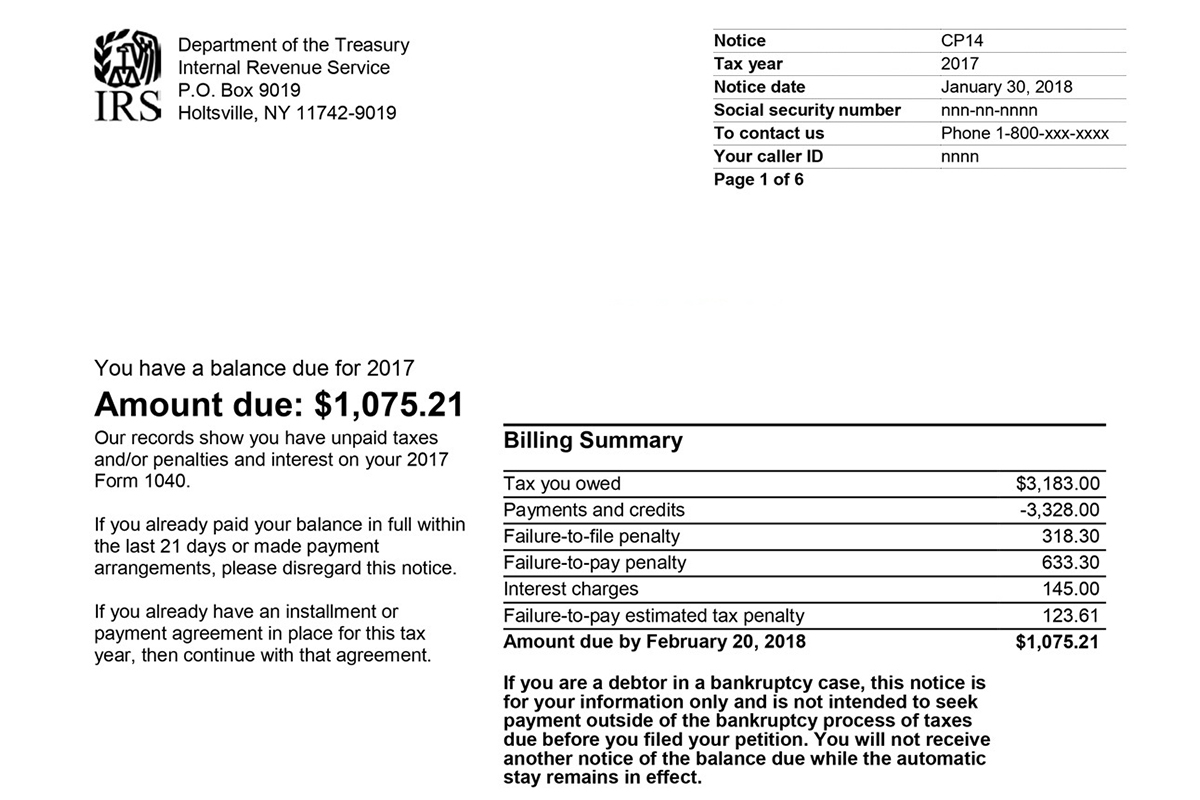
A CP14 is the official letter the IRS sends when it confirms you owe taxes for a given year. It details the amount due - including taxes, penalties, and interest - and serves as the starting point of collection procedures.
- Shows your outstanding tax balance
- Includes any accrued penalties and interest
- Includes a payment due date - typically 21 days from notice

Why You Received a CP14
The IRS may issue a CP14 if it determines your tax return shows a balance due - or if a payment you submitted didn't post properly. Common reasons include underpayment of tax, under-paid quarterly estimates, or processing delays.
- Your federal tax return reflected a remaining balance due
- Insufficient withholding or estimated payments during the year
- Payments not properly posted to your account due to delays
- Late filing or failure-to-pay penalties applied to unpaid taxes
How to Respond to CP14
Your next steps depend on whether you agree with what the IRS claims. Time is important - untreated balances grow due to interest and penalties.
- Review the Notice Thoroughly: Confirm the tax year, amount due, and that you owe what's listed.
- If You Agree: Pay the balance by the due date or set up a payment plan.
- If You Disagree: Reach out to the IRS - or let Resolved Tax review the notice for you and handle the dispute.
- If You Can't Pay It All: Consider IRS-approved payment plans or hardship options to avoid enforced collection.
- Keep Records: Save a copy of your notice, any payment confirmations, and all communication for future reference.


When You Should Contact Resolved Tax
Even a simple CP14 can become complicated - especially if there's a dispute, missed payments, or financial hardship. Let us step in if:
- You believe the balance or penalties are incorrect
- You can't pay the full amount now
- You're worried about interest, liens, or enforced collection
- You want a professional to represent you and negotiate
- You need help setting up a payment plan or other relief options
