What Does a CP501 Notice Mean?
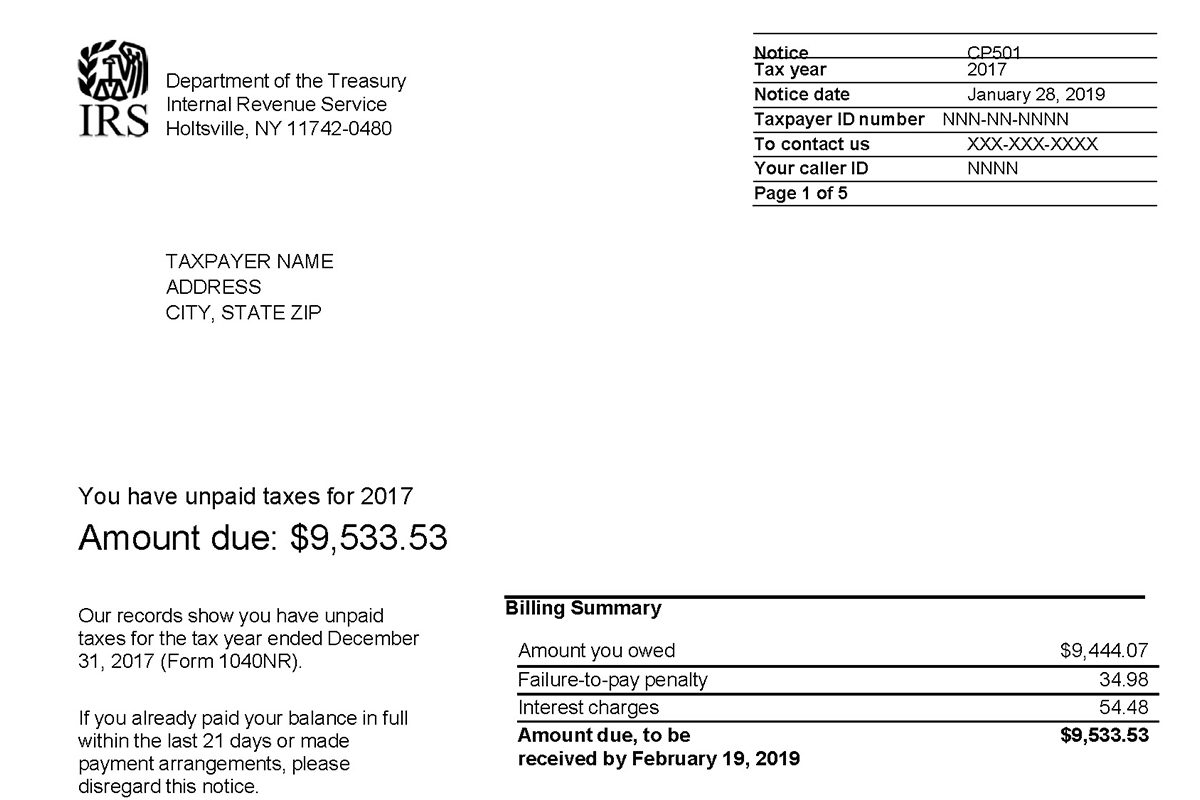
A CP501 is the first reminder you receive from the IRS when you still have a tax balance due after a prior notice (typically a CP14). It includes additional failure-to-pay penalty and interest.
- Shows your tax balance (tax, plus penalties & interest)
- Lists the tax year and amount due
- Provides a payment deadline and payment options (online or by mail)

Why You Received a CP501
The IRS sends a CP501 when you still owe taxes after a prior balance-due notice (usually a CP14), and no payment or payment arrangement was made.
- You had a balance due on your tax return that went unpaid
- You didn't respond to the first notice (CP14) by the due date
- Interest and late-payment penalties have accrued
How to Respond to CP501
You have a few options - depending on whether you agree with the amount owed, can pay, or need to dispute it.
- Review the Notice Thoroughly: Confirm the tax year and the amount due are accurate.
- If You Agree: Pay the full balance or set up an installment payment plan via IRS payment options.
- If You Disagree: Contact the IRS using the contact information on the notice to dispute the balance or provide supporting documentation.
- If You Can't Pay in Full: Consider payment plan options or look into applying for penalty relief (e.g. through first-time abatement, if eligible).
- Keep Records: Save a copy of the notice, payment confirmations, and any correspondence or agreements for your records.

When You Should Contact a Tax Professional
A CP501 can become serious - especially if there are disputes, missed payments, or risk of liens. Consider professional help if any of the following apply:
- You believe the balance or penalties are incorrect or unfair
- You can't pay the full amount owed but want to avoid collection
- You want someone to negotiate or represent you with the IRS
- You want help setting up payment plans, penalty relief, or other relief options
