What Does a CP503 Notice Mean?
A CP503 is the IRS's "second reminder" - sent when you still have an unpaid balance and you did not respond to the prior notice (often a CP501). It shows how much you owe now including added failure-to-pay penalties and interest.
- Displays your balance (tax owed + updated penalties & interest).
- Re-states the tax year and the amount due.
- Includes a payment deadline - typically giving a short window to act before further collection steps.

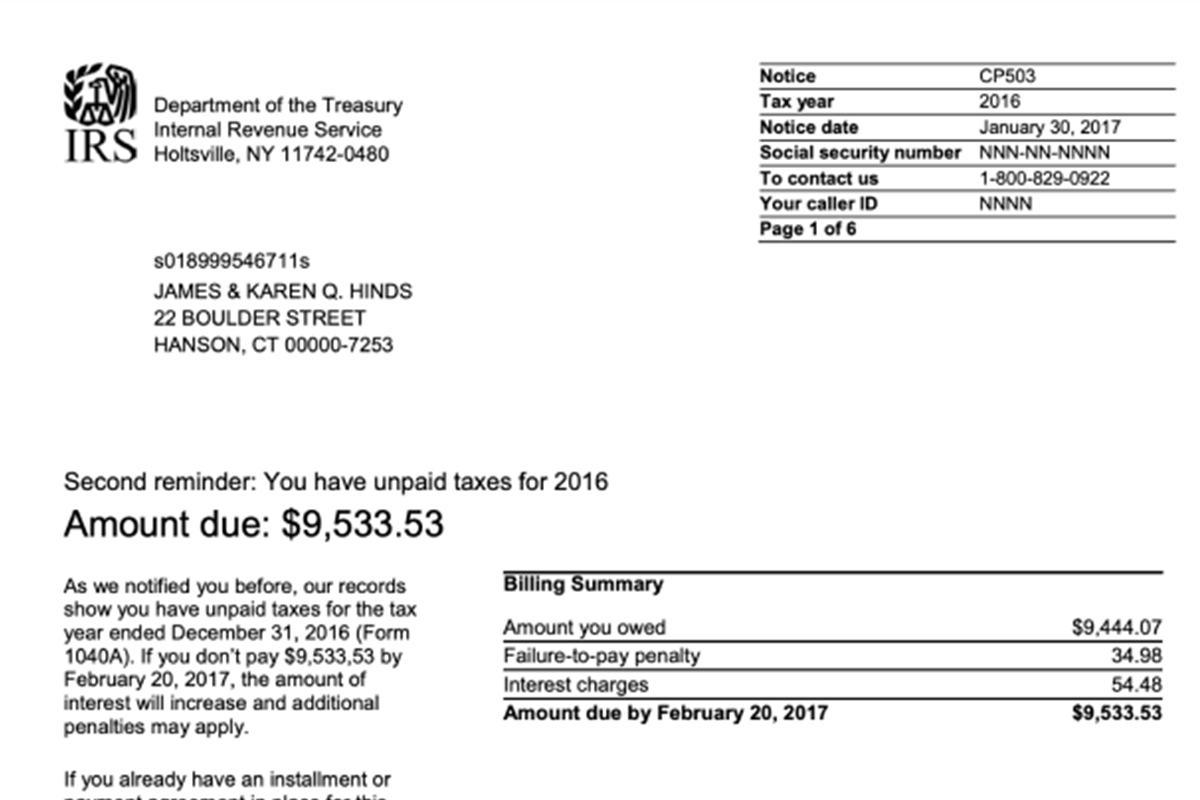
Why You Received a CP503
The IRS sends a CP503 when you still owe taxes and did not respond to the earlier reminder (usually a CP501).
- You had a prior balance due that remained unpaid.
- You didn't respond or act on the first reminder notice by the deadline.
- Interest and late-payment penalties have been added, increasing the amount owed.
How to Respond to CP503
You must act quickly. The notice gives a short deadline (often 10 days) to pay or respond before the IRS escalates collection actions.
- Review the Notice Carefully: Confirm the tax year, the amount due, and check against your records (payments, prior notices, etc.).
- If You Agree: Pay the full balance by the due date - online or by mail.
- If You Can't Pay in Full: Set up a payment plan (installment agreement) or contact IRS to discuss other payment-option arrangements.
- If You Disagree: Call the IRS at the number on the notice and dispute the balance - supply documentation if you believe something is incorrect.
- Keep Records: Save a copy of the notice, any payment confirmations, and all correspondence for future reference.


When You Should Contact a Tax Professional
A CP503 can escalate quickly - especially if debt is large, there's dispute, or you're unable to pay. Professional guidance is recommended when:
- You believe the balance, penalties or interest are incorrect or unfair
- You can't pay the full amount and need help negotiating a payment plan or hardship status
- You're concerned about liens, levies, or garnishments of assets
- You want someone authorized to communicate with the IRS on your behalf
