What Does a CP504 Notice Mean?
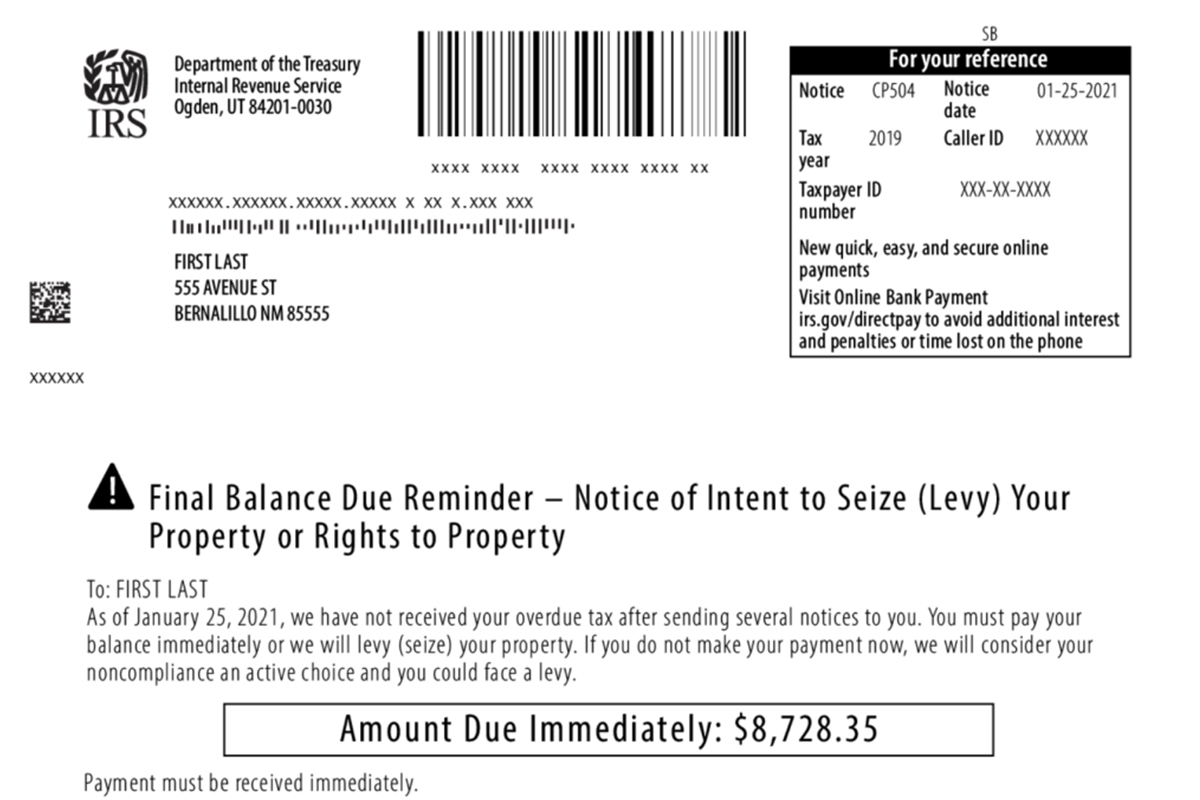
A CP504 is the final formal reminder from the IRS when you have an unpaid tax balance and have ignored previous notices. It includes a Notice of Intent to Levy - meaning the IRS warns they may seize your property, bank accounts, wages, or state tax refund if you don't respond.
- Shows total amount due: tax owed + penalties + interest.
- Specifies a payment deadline and payment options.
- Warns of IRS intent to levy assets - including bank accounts, wages, refunds, or other property.

Why You Received a CP504
Typically, CP504 is sent only after earlier notices (like CP501 or CP503) went unanswered and balance remains unpaid. It means IRS has escalated - you ignored prior reminders, and now enforcement may begin.
- Previous balance due remained unpaid.
- Previous notices went unanswered or unpaid.
- Penalties and interest have accumulated over time.
How to Respond to CP504
You must act immediately. CP504 gives a short window to pay or arrange a plan before the IRS moves to levy your assets.
- Review the Notice Carefully: Confirm the tax year, amount owed, and check past tax payments or records.
- If You Agree with the Debt: Pay the full amount immediately - online, check, or money order.
- If You Can't Pay in Full: Contact the IRS ASAP to arrange an installment plan, or request other relief options.
- If You Disagree with the Notice: Call the IRS using the number on the letter and provide documentation to dispute the debt.
- Keep Records: Save the notice, payment receipts or proof, and any correspondence.


When You Should Contact a Tax Professional
CP504 means IRS enforcement actions are imminent like liens, levies, or seizure of assets. If you're unsure about paying, disputing, or negotiating - professional help can protect your rights and financial stability.
- You believe the amount, penalties or interest are incorrect or unfair
- You cannot pay the full amount and need help setting up a plan or negotiating hardship status
- You want someone to represent or negotiate on your behalf with IRS
- You need help evaluating options like payment plans, offers in compromise, or relief programs
