What Does an LT11 Notice Mean?
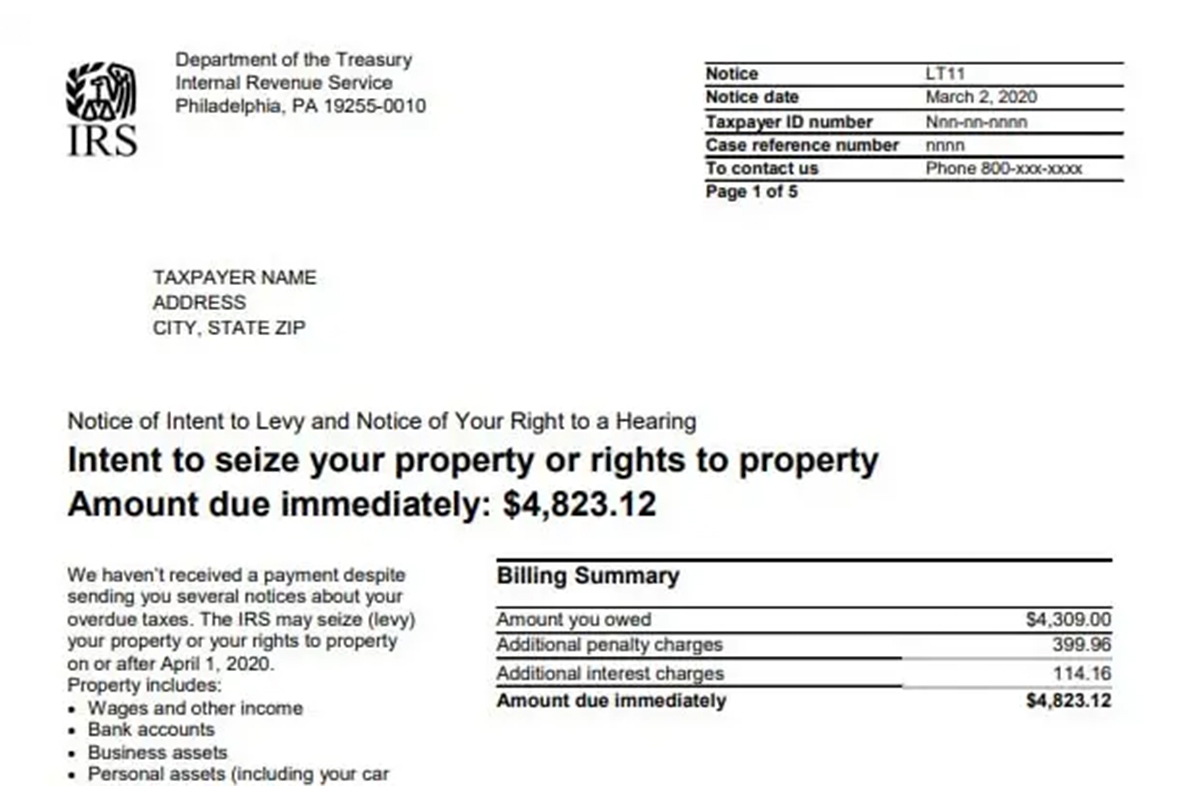
The LT11 is the IRS's "Final Notice of Intent to Levy and Notice of Your Right to a Hearing." It means the IRS may begin seizing your assets - such as wages, bank funds, or property - unless the overdue balance is paid, disputed, or resolved within the notice's deadline.
- Shows the full amount you owe
- Includes a strict 30-day (or as specified) window to respond before levies or liens may begin.
- Alerts you that the IRS plans to levy - which could include wages, bank accounts, Social Security benefits, future refunds, business income or other property.

Why You Received an LT11
The IRS sends an LT11 when previous notices and reminders went unanswered and your tax debt remains unpaid - signaling that the agency is preparing for enforced collection.
- You have a delinquent tax balance that hasn't been resolved.
- Earlier IRS notices (e.g. CP-series, balance-due reminders) were ignored or not responded to.
- The IRS is giving final notice of intent to levy - your assets and income sources are at risk unless you take action.
How to Respond to an LT11 Notice
If you receive an LT11, act quickly. You typically have a 30-day window (from the notice date) to respond to avoid enforced levy, lien filing, or ongoing interest and penalties.
- Review the Notice Carefully: Confirm the tax years, amount assessed (taxes, interest, penalties), and whether the debt aligns with your records.
- If You Agree with the Debt: Pay the full amount owed - this generally stops levy action.
- If You Can't Pay in Full: Set up a payment plan, installment agreement, or explore other relief options (offer in compromise, hardship, partial-payment, etc.).
- If You Disagree with the Notice: File Form 12153 to request a Collection Due Process Hearing (CDP). If timely filed, the IRS is barred from seizing assets while the hearing is pending.
- Keep Good Records: Save a copy of the LT11, proof of any payments made, copies of any appeals or communication, and documentation of your financial situation.


When You Should Contact a Tax Professional
LT11 is a serious legal notice - if you're uncertain about owed amounts, unable to pay in full, or want to explore settlement or hardship options, it's wise to consult a qualified tax professional immediately.
- You believe the assessed taxes, penalties, or interest may be incorrect or unfair.
- You cannot pay the full amount - and need a payment plan, hardship status, or other relief.
- You want professional representation while dealing with the IRS to protect your assets and rights.
- You want to avoid liens, levies, wage garnishment, seizure of bank or business accounts, or other enforced collection.
