What Does an LT38 Notice Mean?
LT38 is the IRS's "Notice of Resumption of Collections" - a renewed balance-due reminder sent after the pause on collection mailings during the COVID-19 pandemic. It informs you of any outstanding tax debt, including interest or penalties that may have accrued while notices were suspended.
- Shows your total amount owed - including taxes, interest, and penalties the IRS has assessed.
- Reminds you that collection operations have resumed, meaning future IRS actions could escalate if debt isn't addressed.
- Provides instructions and options for resolving the debt - payment, installment plan, or other relief.

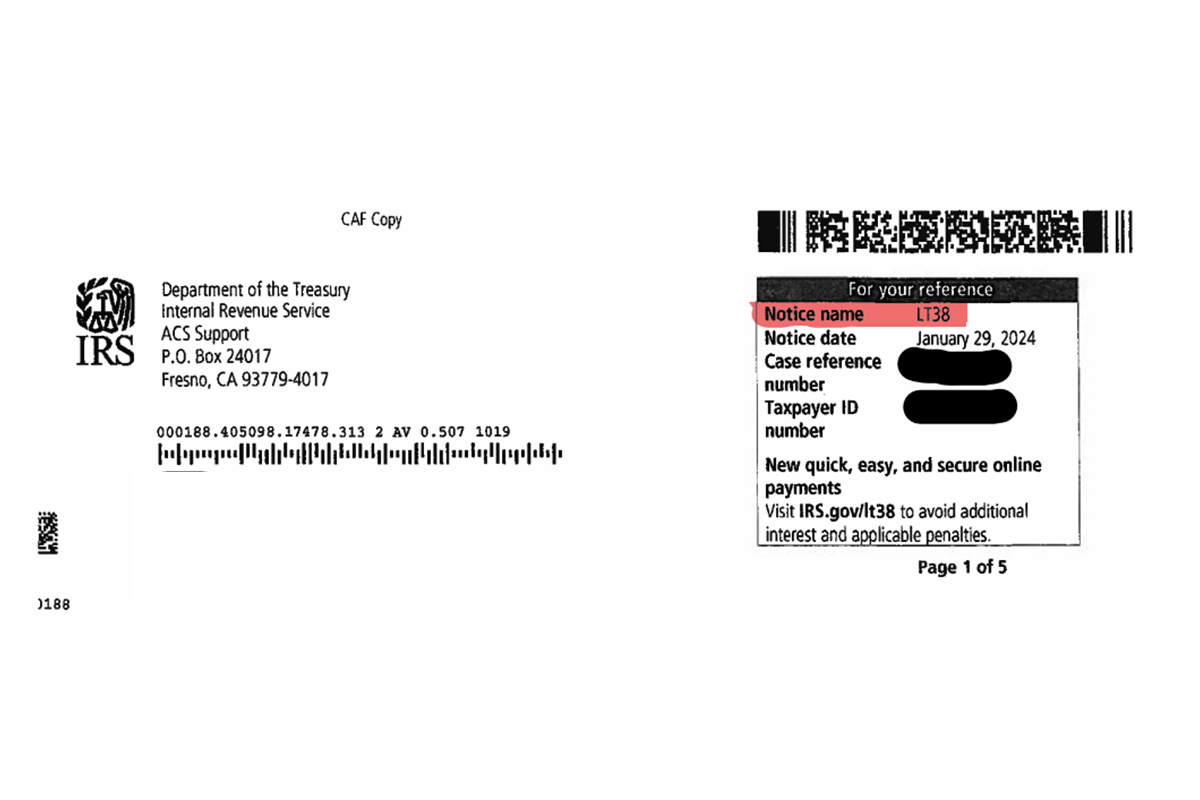
Why You Received an LT38
The IRS issued LT38 as part of its effort to resume full collection activities post-pandemic. If you owed back taxes, or had unfiled returns, this is their way of giving you a formal reminder and a chance to address outstanding obligations.
- You have a pending balance due for past tax years.
- During the pandemic, IRS automated collection mailings were paused - LT38 notifies you that those suspensions have ended.
- You either never responded to previous balance-due reminders, or you have not entered into a resolution agreement yet.
How to Respond to an LT38 Notice
Receiving LT38 doesn't automatically mean immediate levy - but it is a formal reminder that you owe taxes and action is needed.
- Read the Notice Carefully: Confirm the total amount owed, tax years involved, and whether all filings are current.
- If You Agree With the Amount and Can Pay: Pay the full balance promptly - this halts further penalties and interest.
- If You Can't Pay in Full: Contact the IRS or a trusted tax professional to set up a payment plan or explore other relief options.
- If You Believe the Notice Is Incorrect: Gather your tax records and reach out to the IRS or a tax expert for review.
- Stay in Compliance: Make sure all required tax returns are filed. If required returns are missing, submit them ASAP.


When You Should Contact a Tax Professional
LT38 is a formal IRS reminder and a signal that collection activity is back in motion. If you're unsure about your balance, need help organizing past tax years, or want help negotiating with the IRS - a tax professional can help.
- You think the IRS's balance, penalties, or interest may be incorrect.
- You cannot pay the full balance and need a structured payment plan or other relief options.
- You have unfiled returns - or need help confirming filing compliance for past years.
- You want professional representation to avoid future enforcement actions, such as liens or levies.
